
|
||
|
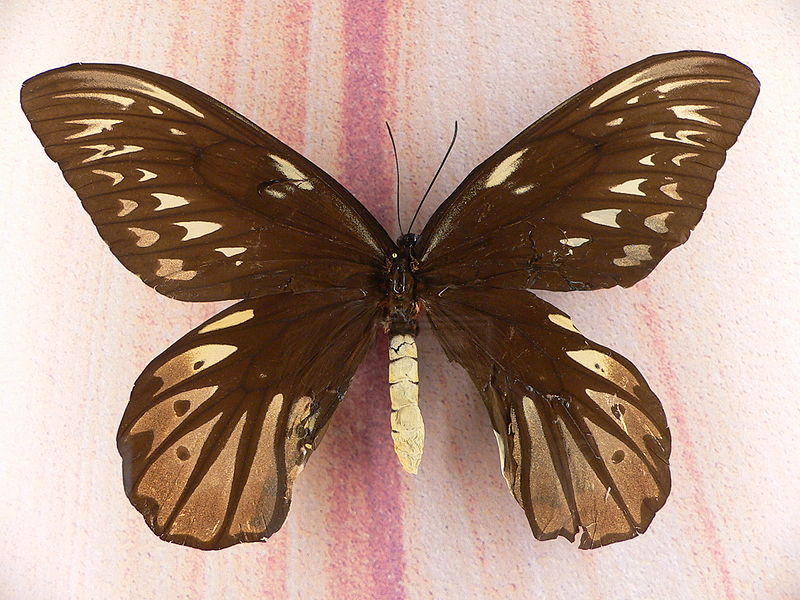
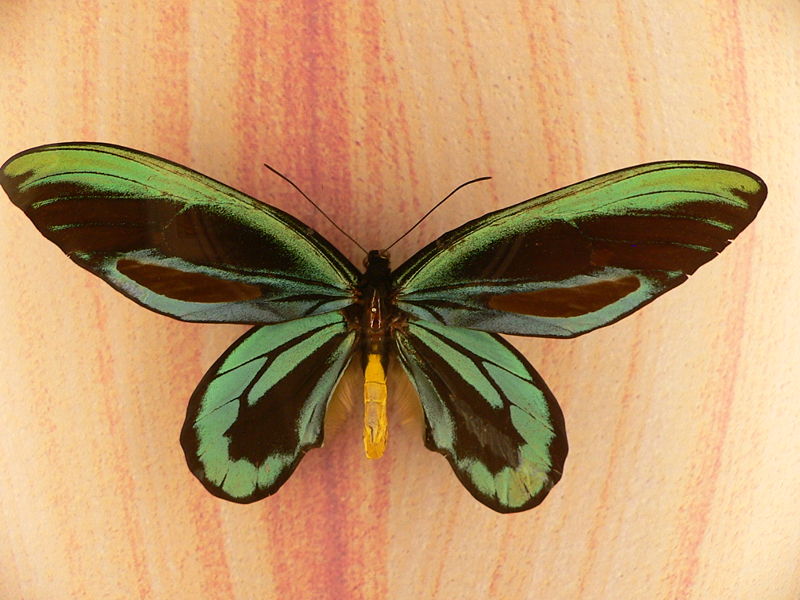
Home > Animal Kingdom > Creepy Crawlies > Giant Winged Insects World of Insect Giants: Giant Butterfly Queen Alexandra birdwing butterflies are truly an exotic species; they live in the tropical jungles, they occur in only one location in the world, and they are highly specialized with very specific adaptations to their native ecosystem. Alexandras are rarely seen by people, even in their native habitat, because they spend much of their short life span in adult form (about 3 to 4 months) floating above the jungle canopy. Like all butterflies, Alexandras do not have mouths with teeth, but rather a straw-like "tongue' used for sipping nectar out of flowers. They play an important part in their ecosystem, helping to pollinate flowering plants that are out of the reach of other insects and animals. Also, like many exotic species living in the tropics, Alexandras are poisonous. They don't have stingers or fangs, but their bodies contain highly toxic fluids that deter other animals from eating them. The bright colors on the wings serve as a warning to potential predators - "I taste really bad, and I'll probably make you sick".
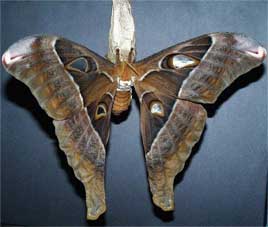
Unfortunately, none of these adaptations have made them resistant to humans. Deforestation in Papua New Guinea is causing loss of habitat for these rare butterflies, and their spectacular size and exotic beauty make them especially attractive to people who collect butterflies and insects. Queen Alexandras can no longer legally be collected from the wild because they are a protected species. This gigantic moth is called a Hercules or Atlas Moth and it has been known to grow up to 11 inches (27cm). Like the Queen Alexandra butterfly, the Hercules moth is an exotic species living in the tropical climates of Southeast Asia. The males and females of this moth species have the same coloring and markings, which are quite elaborate. The outer tips of the forewings have the shape of a snake's head from the side, complete with an artificial "eye". This is probably to scare off birds that might consider eating the moth, but would have second thoughts if it looked enough like a snake. Is it a Moth or Is It a Butterfly?
Biggest Insect Ever Scientists have looked at fossil records dating back to the beginning of earth and have found the largest insects that ever lived existed during the time of the dinosaurs. The biggest insect in prehistoric times was a dragonfly called Meganeura monyi that had a wingspan measuring over three feet (1m). The biggest dragonflies today only grow wings up to 8 inches (20cm) across. |
Get Your Degree!Find schools and get information on the program that’s right for you. Powered by Campus Explorer
|
Copyright © 1998-2015.  Extreme Science is a registered trademark. All rights reserved. Extreme Science is a registered trademark. All rights reserved. |

 Some moths are so brilliantly
colored and fancy that it would be easy to confuse them with a
butterfly. The way you tell the difference between moths and butterflies
is; moths have very specialized antennae, which look feathery.
Butterfly antennae are thin, narrow, and generally end in a "club",
or swollen tip. When moths land, they hold their wings open and
folded over the back while resting, and they tend to be active
at night. Butterflies are usually active during the day, and when
they land to rest, they hold their wings erect and closed.
Some moths are so brilliantly
colored and fancy that it would be easy to confuse them with a
butterfly. The way you tell the difference between moths and butterflies
is; moths have very specialized antennae, which look feathery.
Butterfly antennae are thin, narrow, and generally end in a "club",
or swollen tip. When moths land, they hold their wings open and
folded over the back while resting, and they tend to be active
at night. Butterflies are usually active during the day, and when
they land to rest, they hold their wings erect and closed.